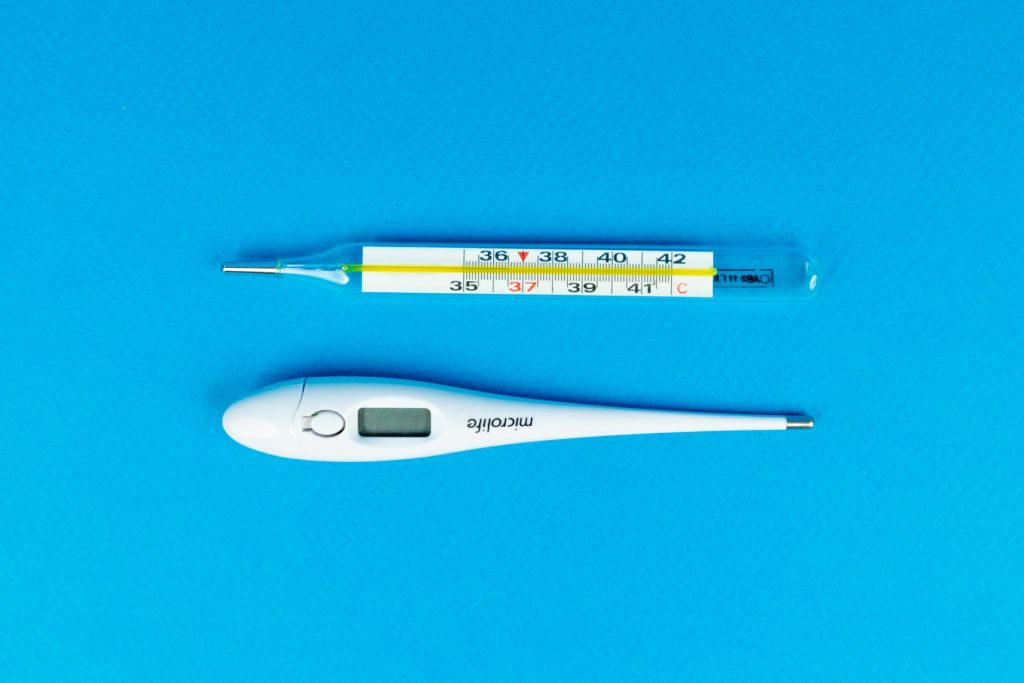
- How does the topic you chose for this assignment relate to your SDG theme? This topic relates to my theme because it is a commonly used device in the health care world. The core focus is placed solely on the importance of innovation in medical care tools and disease prevention. It also directly correlates to good health and well-being.
- Why did you choose this topic, and what does it mean to you? I chose this particular topic because I feel that preventative measures in health often gets overlooked. Many people I know don’t worry about their personal health until something is wrong. In some cases there is not a lot that can be done for someone if they do not get regular check ups. Good health means is important to me because it means longevity, better quality of living and a improved state of mind.
- What tools did you use to complete this assignment? The tools utilized were Microsoft Word to write my essay and Word Press to publish my portfolio. The remaining assistance came from various informative medical articles. Those are listed in the works cited section.
- What did you learn from this assignment? I learned about the importance of thermometers and how they are used in the healthcare system. I also discovered that the analog thermometer made significant contributions to the medical community. It was the predecessor to its digital counterpart. Most importantly, this assignment taught me the value of advanced technology throughout the medical field and how it relates to our overall health.
The mercury-in-glass thermometer was invented by Daniel Gabriel Fahrenheit in the year of 1714. There were other thermometers at time but none as precise or as popular the mercury thermometer. The mercury-in-glass thermometer is a narrow-sealed-glass tube containing a bulb filled with liquid mercury at its base. The way this device works is as follows: the mercury inside the glass expands with heat. As the temperature increases, the mercury level rises in the glass tube. It is a simple concept but very ingenious.
It was originally used to measure daily weather until Fahrenheit improved the device in 1724 by creating a scale, setting 32 degrees as the freezing point of ice melting in water and the temperature of the human body at 96 degrees. This became the world standard for measuring temperature. After Fahrenhiet’s death in 1736, the thermometers were recalibrated and so was the normal human body temperature. 98.6 Fahrenheit became the new normal temperature for the human body instead of the former 96 degrees. After this improvement the device continued to be used to monitor the temperature and health of human beings, but even more efficiently than before. The mercury thermometer contributed to healthcare in a vast number of ways. It took a lot of guesses out of diagnostics, Doctors could track the progression of a disease or illness, and early infection detection saved countless lives.
As much as the mercury thermometer contributed, it also has major downsides. If the device breaks it is possible to get toxic mercury exposure and the broken glass could cause further damage. This can harm humans and animals alike.
Even with the downsides of mercury thermometers, it was still an important invention that contributed to healthcare in a major way and paved the way for scientists to continue to make future improvements to thermometers.
A digital thermometer is an electronic instrument used to measure temperature and displays its readings on a small digital screen. Although simple in its definition and practical use, it is an amalgamation of scientists, engineers and inventors.
The thermistor was one of the earliest versions of a digital thermometer and later would be one of the components of the digital thermometer we know today. A thermistor is a specialized resistor engineered to alter its electrical resistance in response to temperature changes. The invention of the thermistor was an important contribution to measuring temperatures with technology. It wasn’t until the 1960s that Dr. Otto Schmitt came along and invented the first digital thermometer. This device, however, was used mostly for scientific and commercial implementations. The year 1984 marked a milestone when the Danish company Radiometer released the first digital thermometer made for households. This new thermometer used the thermistor sensor for temperature measurement and had a liquid crystal display (LCD) screen.
Since their introduction, digital thermometers have become widely used in homes and in the healthcare world. Outperforming mercury models in almost every way, the digital thermometer quickly became the industry standard for measuring the human body’s temperature. In present day, digital thermometers can be connected to our phones and other devices making monitoring our health even easier.
The digital thermometer is built around three major components: a thermistor that alters its resistance based on temperature changes, a microcontroller that processes this data, and a digital display that presents the final reading. When the temperature rises the thermistor goes down and when the temperature goes down the thermistor goes up. This information is then sent to the microcontroller which is a small computer that takes electrical signals from the thermistor and translates them into a temperature value which then displays on the digital screen. This device is performing an internal analog to digital conversion.
The digital version and the analog version are both important, however the digital version is far more superior. The analog thermometer has the element of being dangerous if broken while the digital version is completely safe. The analog thermometer screen is difficult to read and requires concentration and patience while the digital version is easy to read. Some of the digital thermometers even have backlighting so you can read it in dimly lit settings. It can take three to five minutes to get a reading from a mercury thermometer, while it only takes 30 second to a minute for its digital counterpart. Many of these have sound alerts letting you know when it’s done. The digital version excels in every area that the analog version lacks. The digital thermometer is simply safer, faster and easier to read. The analog served its purpose in a big way, after all there would be no digital version if there was not an analog version first.
The digital thermometer continues to become more advanced with time. There are smaller improvements like thermometers turning off on their own when not being used, which helps save battery life. Some have a memory function so you can track a fever or cold, others can connect to smart phone apps via Bluetooth and log data automatically. It is difficult to say how much more advanced the digital thermometer will get. Perhaps ever faster readings, maybe a self-cleaning feature or possibly a bigger screen that doubles as a handheld gaming console. I am not sure what the future holds for the digital thermometer, but I am watching with both admiration and curiosity.
Works Cited
EBSCO. “Mercury Thermometer is Developed.”
Baker-Blocker, Anita 2023
https://www.ebsco.com/research-starters/history/mercury-thermometer-developed.
Dubai Sensor. “Digital Thermometers: The Must-Have Tool for Accurate Temperature Readings.”
National Library of Medicine. “History of the Thermometer.”
Department of Pharmaceutic Research, Linkoping University, Linkoping, Sweden
https://pmc.ncbi.nlm.nih.gov/articles/PMC7120475/.
ScienceDirect. “Digital Thermometers.”
Galzerano, Gianluca. Svelto, Cesare. Bava, Elio. Liu, Quan.
https://www.sciencedirect.com/topics/engineering/digital-thermometer.
SurgiNatal. “The Vital Role of Digital Thermometers in Health Monitoring.”
Surginatal.
HowStuffWorks. “The Mercury Thermometer: Where did it come from? | Stuff of Genius.”
HowStuffWorks.
History of Simple Things. “Digital Thermometer: How Does It Work?”
History of Simple Things.

